Pons vs Creating Your Own Token on Robinhood Chain: Which Is Better?
Launch on the Pons launchpad or create your own token with a factory like DegenKit? A plain comparison of control, liquidity, fees, taxes and risk on Robinhood Chain.
 DegenKitNovember 7, 2026 · 5 min read
On Robinhood Chain there are two common ways to get a new token: use a launchpad such as Pons (often searched as Pons Launcher or PonsLauncher), or create the token yourself with a no-code factory like DegenKit. Both are non-custodial and both take a few minutes. They differ in who decides what happens next. For background on the launchpad, read What is Pons?.
Quick comparison
| Launchpad (Pons) | Your own token (DegenKit) | |
|---|---|---|
| Who sets supply | The launchpad (fixed 1 billion, per public reports) | You |
| Trading pool | Created for you at launch | You create and fund it yourself |
| Liquidity | Handled by the launchpad's design | Your choice: amount, price, timing |
| Buy/sell tax | Check Pons for what is supported | Optional tax token with rates you set |
| Speed to first trade | Fastest | A few more steps |
| Control and flexibility | Lower | Higher |
| Who holds the supply | Defined by the launchpad's rules | Your wallet, from the start |
How each one works
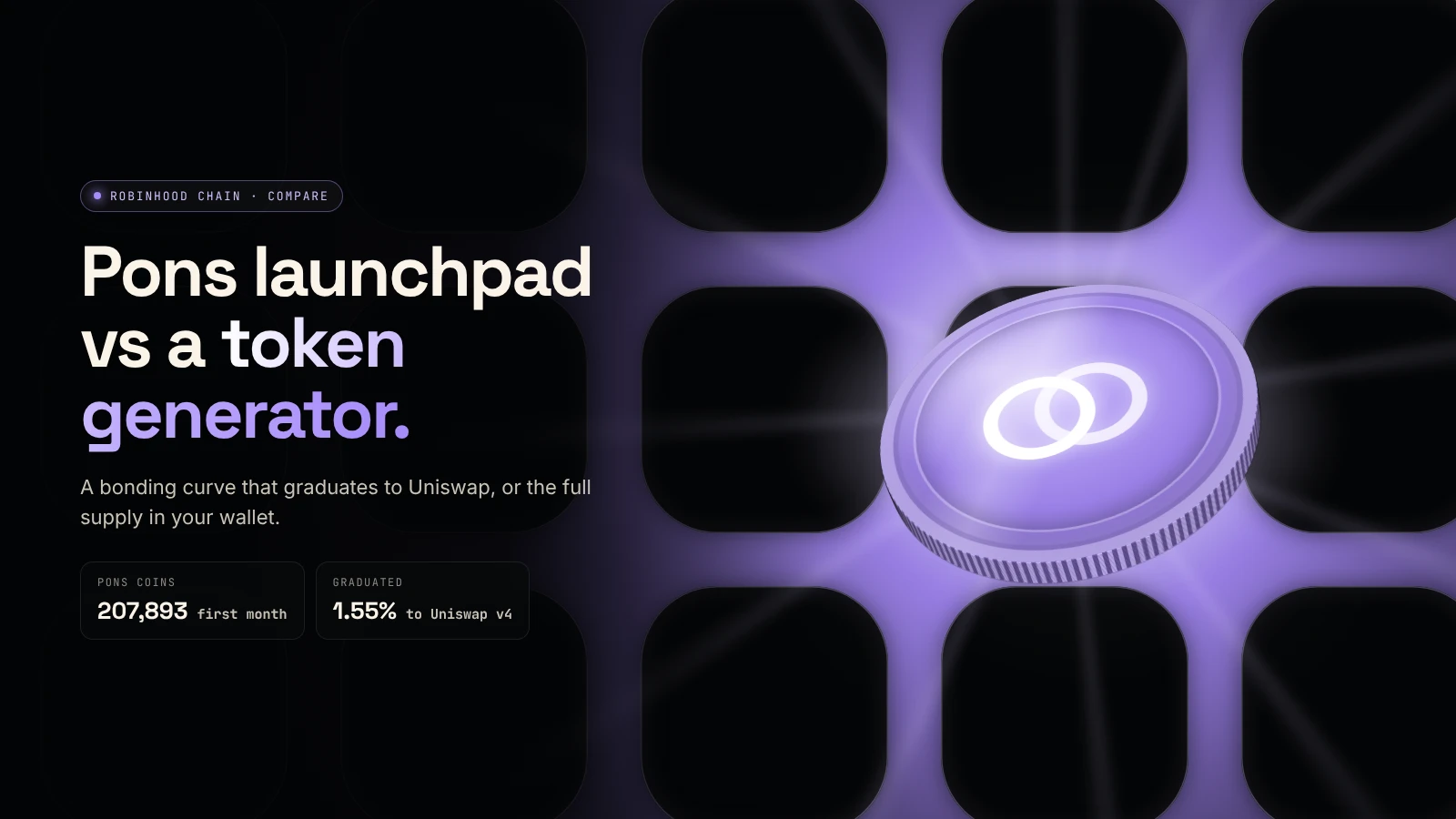
On a launchpad like Pons Launcher, you enter a name, a symbol and an image, pay the launch fee and sign once. The launchpad creates the token and its trading pool together, with rules it sets for supply and liquidity. You get speed, and you accept the launchpad's design.
With your own token, a factory contract deploys the token and sends the whole supply to your wallet. Nothing trades yet. You then decide how much liquidity to add, at what price and on which DEX. You get control, and you take on the extra steps.
Neither route holds your funds. In both cases you sign from your own wallet.
What it costs
- Launchpad: a launch fee set by the launchpad, plus gas. Trading on the launchpad may also carry its own fees. Check the Pons site for current numbers, because they change.
- Your own token: the service fee shown on the form before you sign, plus gas, plus whatever ETH you choose to put into the liquidity pool. See token launch costs by network.
The real difference is liquidity. On a launchpad the pool mechanics are built in. With your own token, the liquidity is your money and your decision.
When a launchpad fits
- You want a token that can trade within minutes and do not need custom settings.
- You are fine with the launchpad's supply and pool rules.
- You are launching a joke or an experiment and do not plan a long-term project.
When your own token fits
- You want to choose the supply or hold it all in your own wallet.
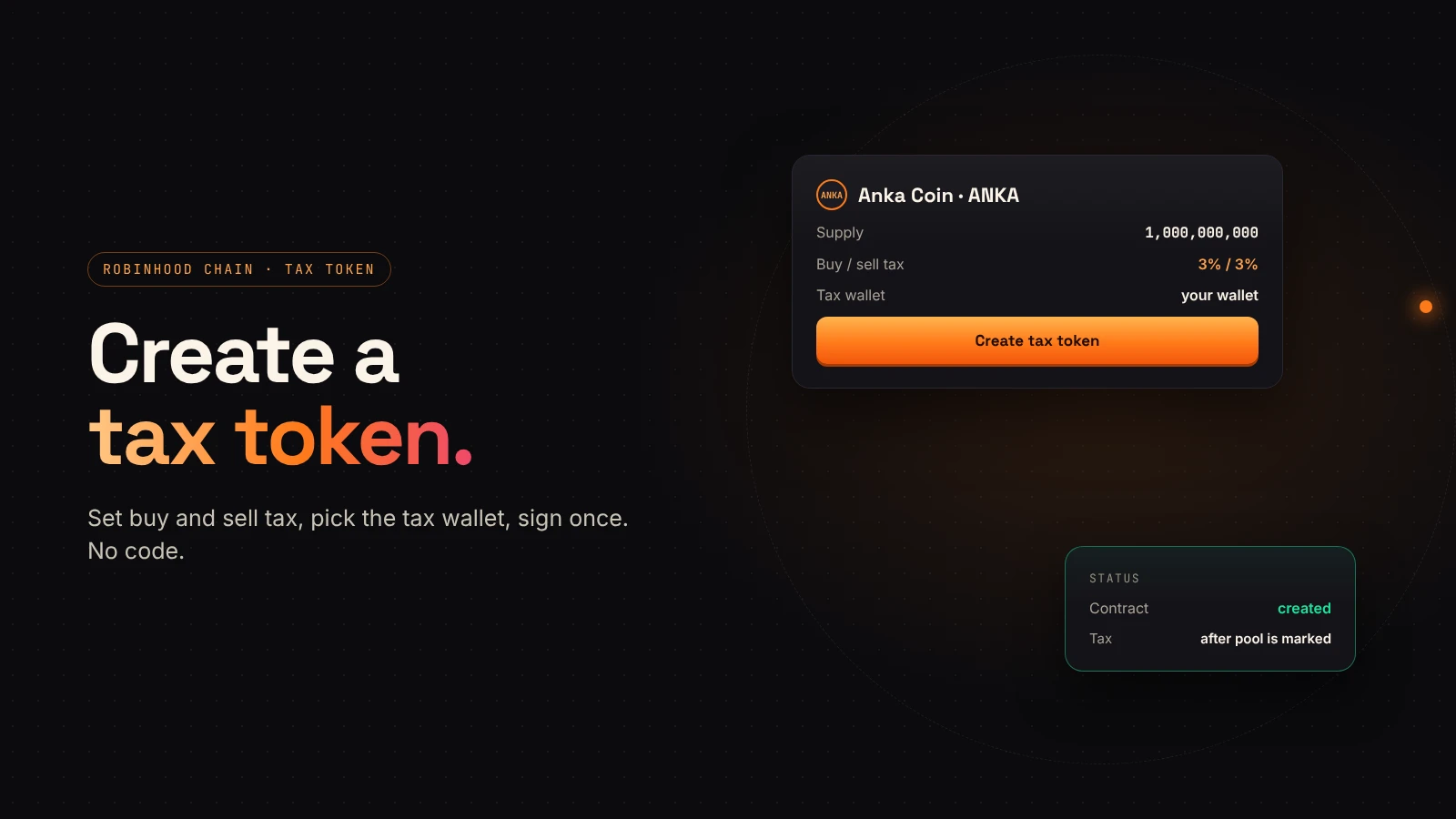
- You want a tax token with buy and sell fees you set.
- You want to plan liquidity yourself: how much to add, when, and how to lock it.
- You want one token to be launched the same way on several chains.
What does not change
- Risk. Neither method makes a token safe or valuable. Most new tokens fail.
- Honesty. Share the contract address, how the supply is split and what you did with liquidity. Buyers check this.
- Wallet safety. Read what you sign. Use a fresh wallet for launches.
How to launch your own token
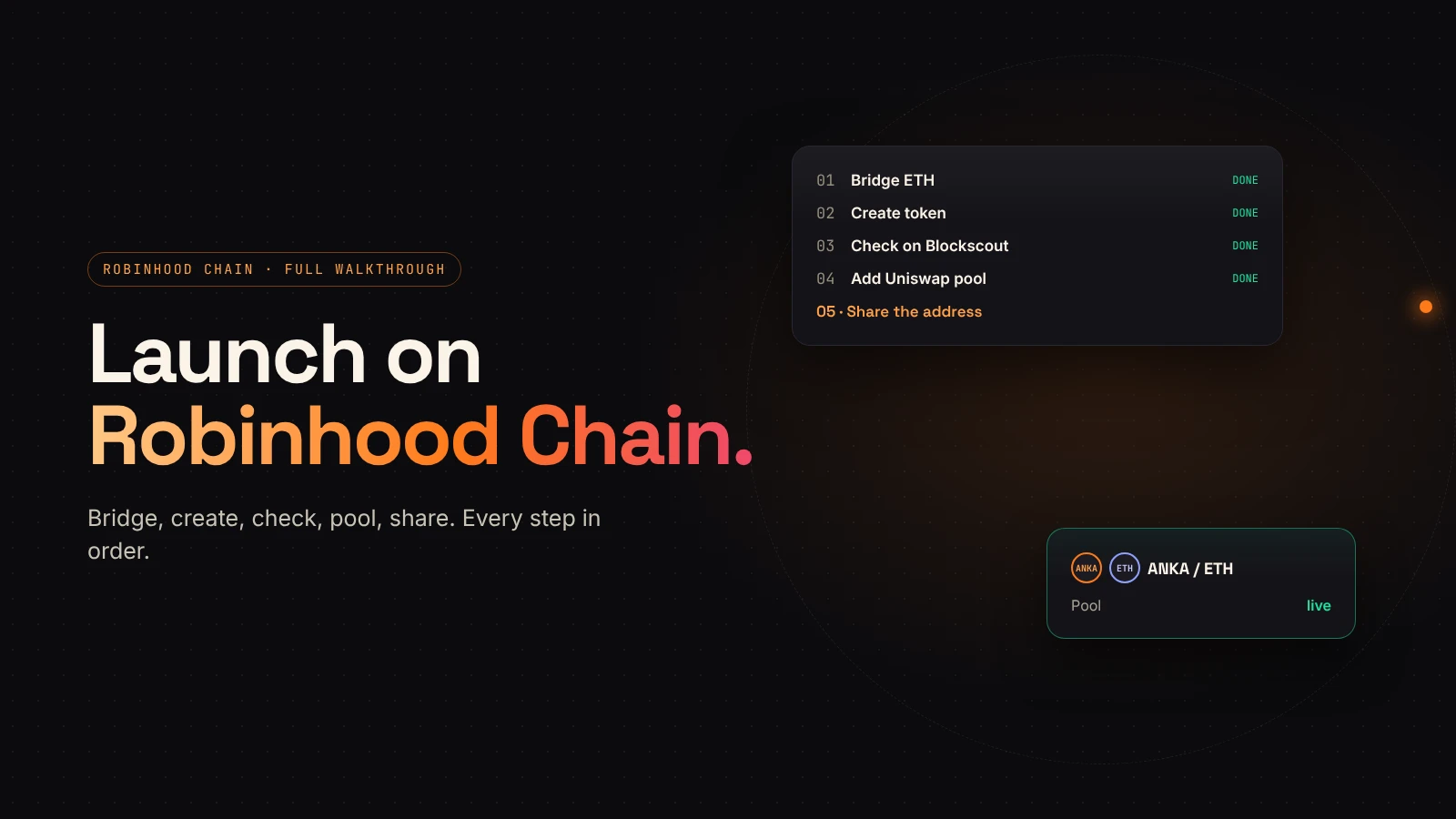
- Bridge ETH to Robinhood Chain for gas and liquidity.
- Create the token on the Robinhood Chain token creator. The service fee is shown before you sign.
- Add liquidity on a DEX, then check the pool. The full walkthrough covers every step.
- If you chose a tax token, read how tax tokens work first.
Not sure which to pick? Try a small test launch with a tiny amount of ETH first.
FAQ
Is it better to launch on Pons or create my own token?
It depends on what you need. Pons is faster to a first trade. Your own token gives you control over supply, taxes and liquidity. For a long-term project, control usually matters more than speed.
Can I do both?
Yes. They are separate tools, and nothing stops you from creating a token with a generator and also launching a different coin on a launchpad.
Do I need to code to create my own Robinhood Chain token?
No. A token generator handles the contract. You fill in a form and sign one transaction.
Who holds the supply in each case?
With your own token, the full supply goes to your wallet. On a launchpad, the supply follows the launchpad's rules, which usually place it in a trading pool.
For a deeper look at the launchpad model, read Pons launchpad vs a token generator.
Not financial advice. Tokens can lose all their value.