How to Read a Holder Bubblemap Before You Buy
Big bubbles are not automatically bad news. Learn what a holder bubblemap shows, what the largest accounts usually are, and how to check them yourself.
 DegenKitOctober 29, 2026 · 5 min read
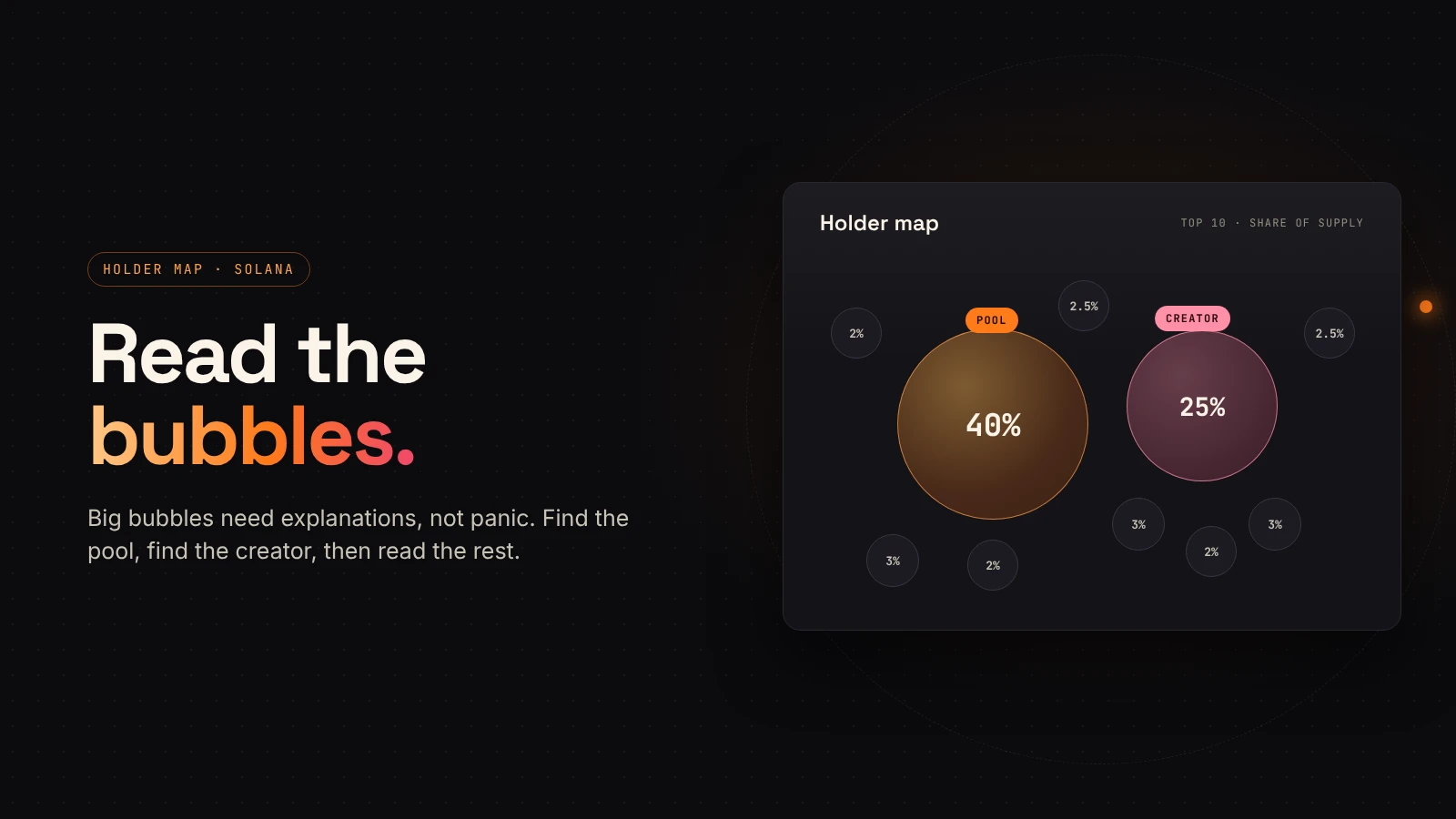
A holder bubblemap turns a list of addresses into a picture. Each bubble is a holder, and bigger bubbles hold more of the supply. It is one of the fastest ways to see whether a token is spread out or concentrated in a few places.
It is also easy to misread. The biggest bubble is often not a person at all. This guide explains what the map shows, what large holders usually are, and how to check them.
What the map actually shows
DegenKit's Scanner draws the top 10 holders of a Solana token. Each bubble's size reflects its share of the supply, compared with the largest holder, and shows its percentage and a shortened address.
The data comes from Solana's getTokenLargestAccounts method. According to Solana's documentation, it returns up to 20 of the largest token accounts for a mint. That detail matters:
- A token account is not the same as a wallet. One wallet can own several token accounts.
- A liquidity pool keeps its tokens in a token account too, so a pool appears as a holder.
The usual suspects behind big bubbles
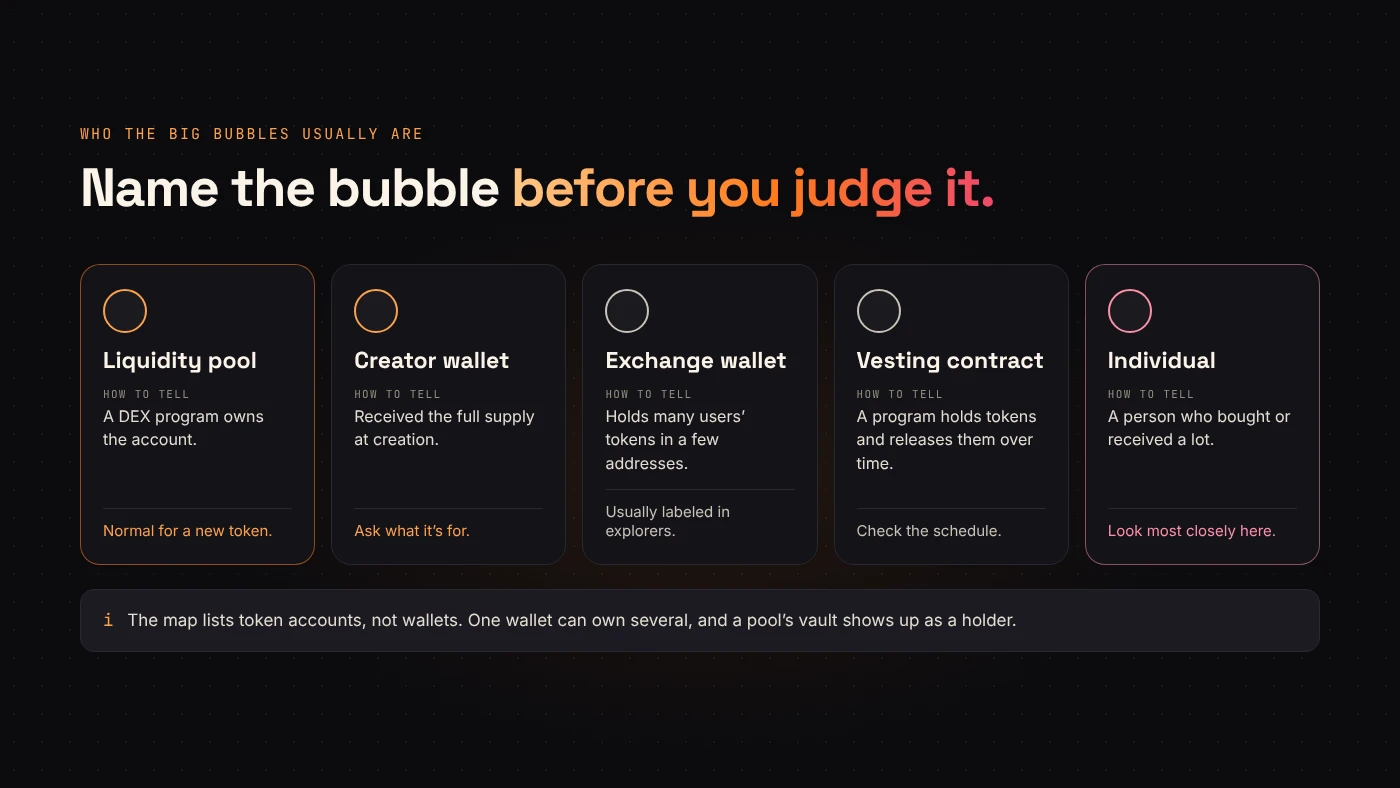
When one bubble dominates, it is usually one of these:
- A liquidity pool. The tokens available to trade sit in the pool. A large pool bubble is normal for a new token.
- A creator or team wallet. On DegenKit, the full supply goes to the creator's wallet at creation. Until it moves, that wallet holds 100%.
- An exchange or custody wallet. Centralized platforms often hold many users' tokens in a few addresses.
- A locked or vesting contract. Tokens promised to a team or treasury can sit in a contract that releases them over time.
- A person who bought or received a lot. This is the case to look at most carefully.
How to identify a large holder
Copy the address from the bubble and open it in a Solana explorer.
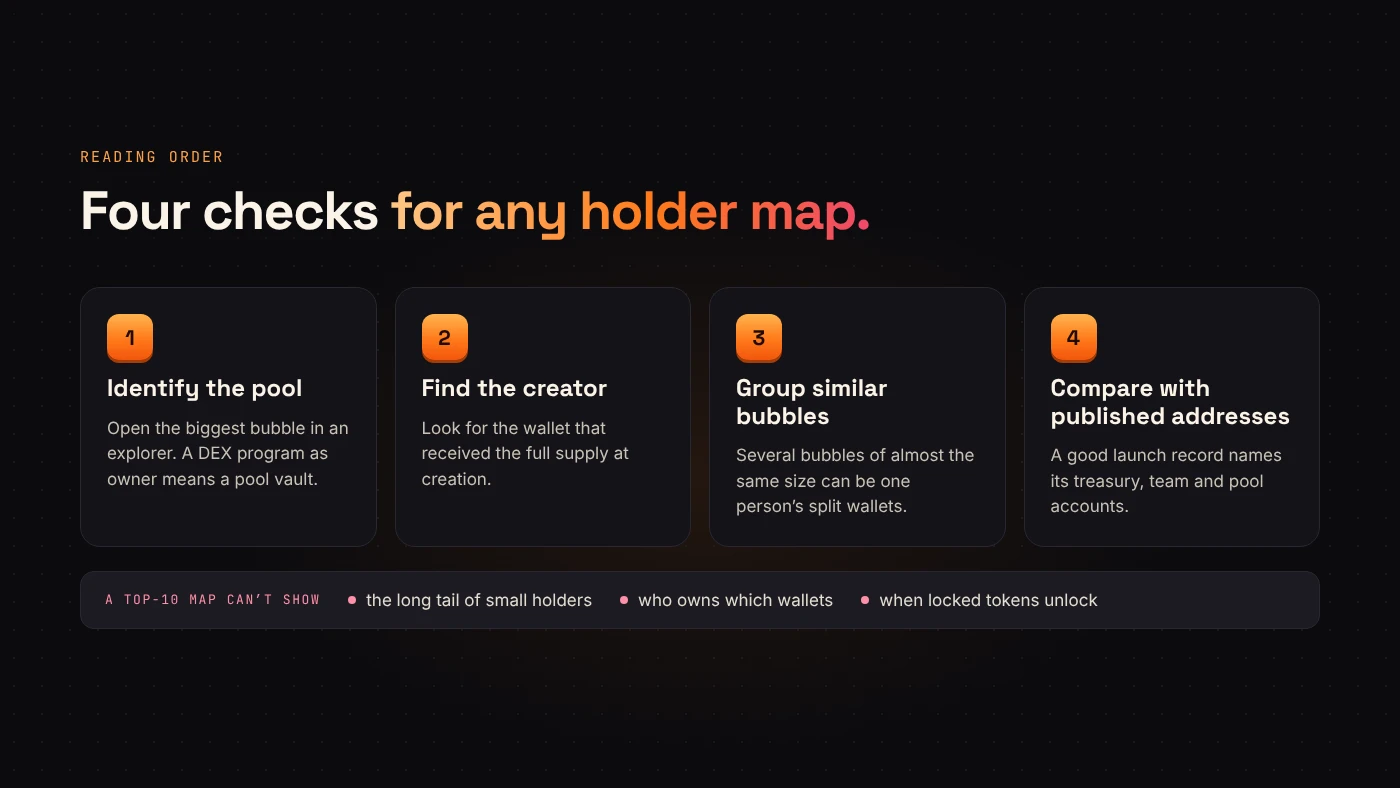
- Check the owner. For a token account, the explorer shows which wallet or program owns it.
- Look for a program owner. If a DEX program owns the account, it is almost certainly a pool vault.
- Read the history. A wallet that received the full supply at creation is the creator. A wallet that bought in many small swaps looks different.
- Compare with the project's notes. A good launch record names its treasury, team and pool addresses.
Read concentration without the pool
Once you know which bubble is the pool, mentally set it aside. What matters is how the rest of the supply is spread.
Take a simple illustration. The pool holds 40%. The next wallet holds 25% and the remaining eight hold 2–3% each. Without the pool, that second wallet controls a large part of the tradable supply. It could move the price sharply in one sale.
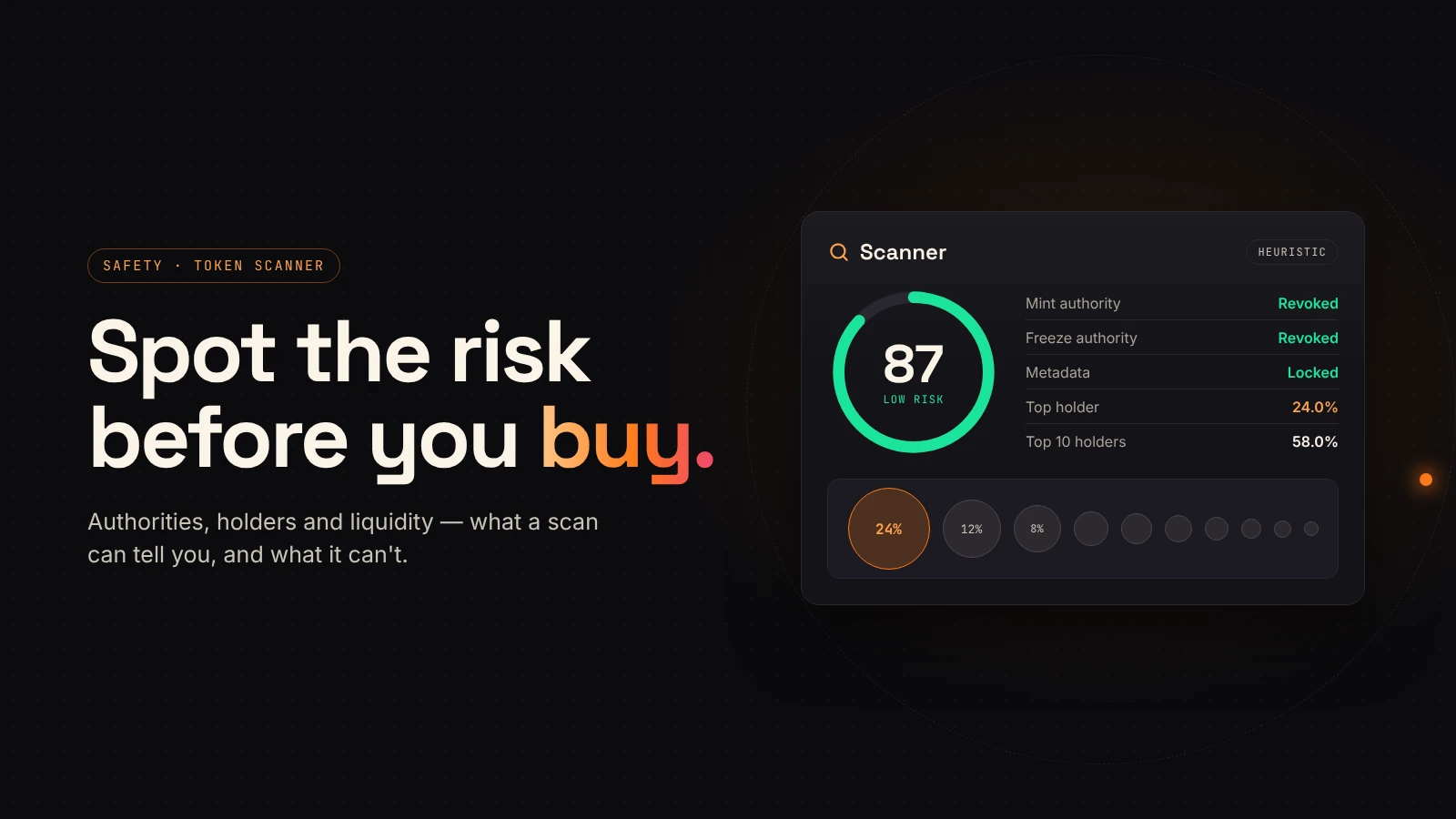
The Scanner's score flags a single holder above 20% or 50%, and top ten holders above 50% or 80%. Those thresholds count every token account, including pools. That is why the score is a starting point and the map is where you add context.
Patterns worth a second look
- Several mid-sized bubbles of almost the same size. This can be normal, but it can also mean one person split tokens across wallets.
- A creator wallet that still holds most of the supply after launch. Ask what it is for and whether it is locked.
- A pool bubble that is small compared with individual holders. Thin liquidity means large sales move the price more.
- Large holders with no history beyond receiving tokens. Find out who sent them and why.
None of these prove bad intent. They tell you which questions to ask.
What a bubblemap cannot tell you
A top-10 view cannot show the long tail of small holders. It cannot prove that two wallets belong to the same person, or that a vesting contract releases tokens when promised. It also changes over time, so a snapshot from launch day says little about next month.
Use the map together with the other checks: mint and freeze authority, metadata, and liquidity evidence.
Wrap up
A holder bubblemap is a quick visual of who holds a token. Read it in order: identify the pool, find the creator, then look at how the rest of the supply is spread. Big bubbles need explanations, not panic. Scan a Solana token with DegenKit and open the largest holders in an explorer before you decide.