Aerodrome vs Uniswap on Base: Where to Add Liquidity
Aerodrome vs Uniswap on Base for a new token. How each DEX pays liquidity providers, which pool types they offer and which is simpler for a first launch.
 DegenKitNovember 16, 2026 · 5 min read
On Base, Uniswap is the simpler place to open a first pool: create a V2 pool with your token and ETH, keep the LP tokens and earn trading fees. Aerodrome is Base's largest DEX by volume and pays most of its rewards in AERO emissions directed by token holders' votes, which suits projects ready to bribe voters for liquidity. Many projects start on Uniswap and add Aerodrome later.
How does Uniswap work on Base?
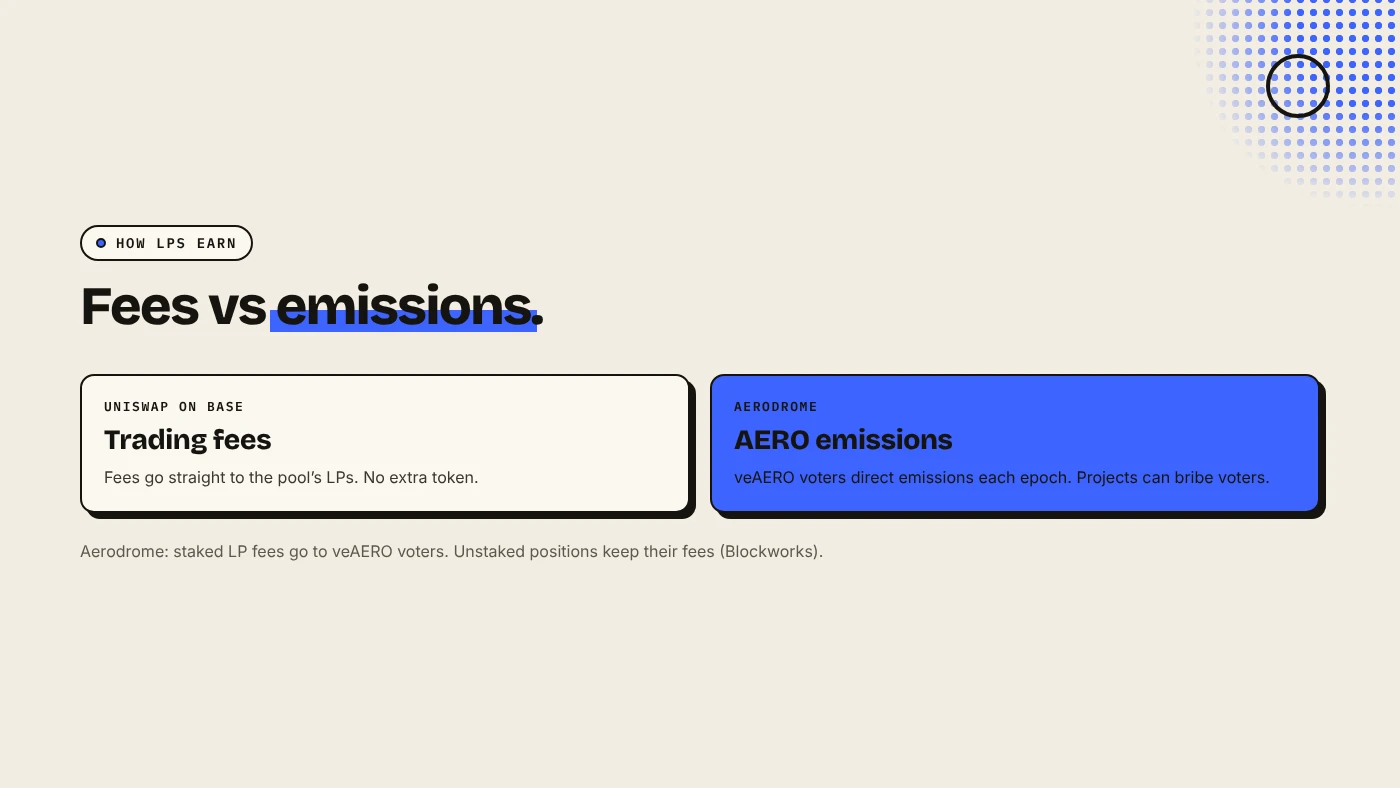
Uniswap on Base works like Uniswap on Ethereum. You pick a version, deposit two tokens and receive LP tokens (v2) or a position NFT (v3 and v4). Trading fees go straight to the pool's providers. There are no emissions to vote on and no extra token to manage. Our guide to adding liquidity on Uniswap walks through it.
For a tax token, use v2. Uniswap's docs say fee-on-transfer tokens do not work with its v3 routers.
How does Aerodrome work?
Aerodrome uses the ve(3,3) model, which Blockworks describes like this:
- AERO holders lock tokens for up to four years and receive veAERO, an NFT with votes and a claim on protocol revenue.
- Each epoch, veAERO holders vote to direct AERO emissions to specific pools.
- Projects can bribe voters to send emissions to their pool.
- Staked LP fees go to veAERO voters through gauges. Unstaked positions keep their trading fees.
Aerodrome offers basic pools for stable and volatile pairs, and Slipstream, a concentrated-liquidity module derived from Uniswap V3.
How do they compare?
| Uniswap on Base | Aerodrome | |
|---|---|---|
| LP earns | Trading fees | AERO emissions if staked, fees if unstaked |
| Pool types | v2, v3, v4 | Basic stable and volatile, Slipstream |
| Extra token | None | AERO and veAERO |
| Attracting liquidity | Your own deposit | Votes and bribes |
| Tax token | v2 works | Check before you add |
| Best for | A first, simple pool | Projects building deep, incentivized liquidity |
Which should you choose for a new token?
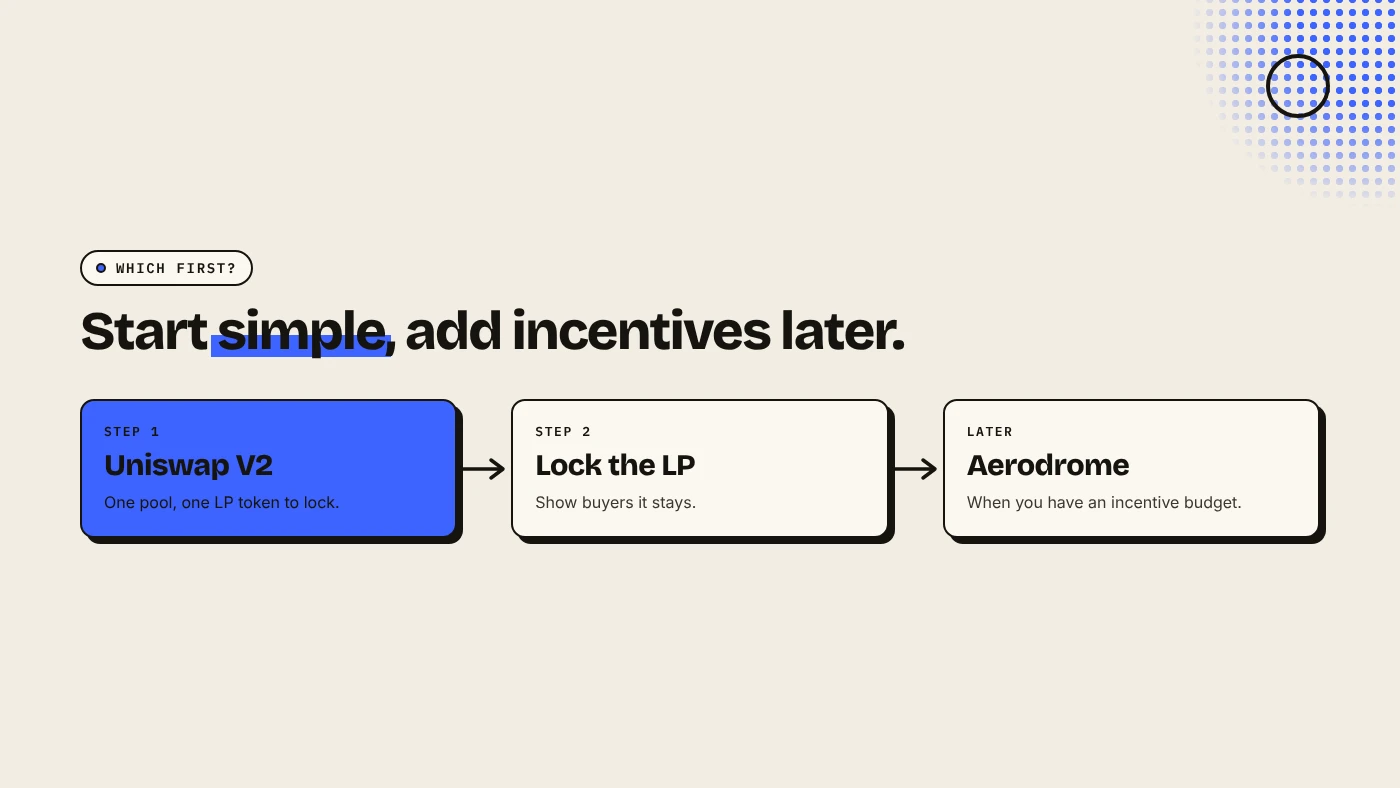
- Start on Uniswap v2 if you want one pool, one LP token to lock, and no extra mechanics. This is the usual first step after creating a token on DegenKit's Base launcher.
- Add Aerodrome when your project has a budget for incentives and wants deeper liquidity. Bribes cost money, and emissions only last while voters keep choosing your pool.
Buyers' DEX aggregators route across both, so a token can trade on Uniswap and still be reachable for Aerodrome users.
What should you do after the pool exists?
- Lock or burn the LP. See how to lock liquidity on Ethereum, Base and BNB Chain.
- Check the pool on BaseScan and share the contract address.
- For a tax token, mark the pair in My Tokens so the tax applies.
For the token itself, see how to launch a token on Base.
What are the risks?
- Emissions end. Liquidity attracted by bribes can leave when rewards stop.
- Token risk. AERO's price affects what emissions are worth.
- Impermanent loss on any pool.
- Unlocked LP on any DEX can be withdrawn.
You can lose money in crypto. This is not financial advice.
FAQ
Is Aerodrome better than Uniswap on Base?
It is larger by volume, but more complex. For a first pool, Uniswap v2 is simpler.
Do I need AERO to add liquidity on Aerodrome?
No. You can add liquidity with your token and ETH. AERO is what staked providers earn and what voters lock.
Can a token have pools on both?
Yes. Many tokens trade on both, and aggregators route between them.
Sources
- Blockworks: Aerodrome Finance
- CoinPaprika: What is Base
- Uniswap blog: Uniswap v2 now live across more major chains
- Uniswap: Token integration issues (v3)
Create a plain or tax token first on the DegenKit Base launcher.