How to Create a Crypto Token: A Step-by-Step Guide
How to create a crypto token in seven steps. Pick a blockchain, plan supply and name, create it with a token generator, add liquidity and launch it safely.
 DegenKitNovember 17, 2026 · 5 min read
To create a crypto token, choose a blockchain, decide the name, symbol and supply, create the token with a token generator or your own smart contract, then add liquidity on a DEX so people can trade it. With a no-code generator, the token itself takes one transaction. The planning before it and the liquidity after it decide whether the launch works.
Step 1: Which blockchain should you use?
Pick the chain your buyers already use and can afford:
- Solana: cheap and fast, with the biggest meme coin market.
- Ethereum: the most credible and the most expensive.
- BNB Chain and Base: low fees on EVM chains.
- Robinhood Chain and Elysium: newer chains with early-mover attention.
Our comparison of which blockchain to launch a token on goes deeper.
Step 2: What should the name, symbol and supply be?
- Name and symbol: short, memorable and not a copy of another project. Search DEX screeners first. The meme coin name generator can help.
- Supply: a presentation choice. One billion is common for meme coins. What matters is the share each holder owns.
- Allocation: decide how much goes to the pool, the team and airdrops before you create anything. See token supply and allocation.
Step 3: Plain token or tax token?
A plain token has fixed supply and no owner powers. It is the cleanest choice for most launches. A tax token takes a percentage of each buy and sell and sends it to a wallet you choose, which only makes sense if the tax pays for something clear. See how buy and sell tax works.
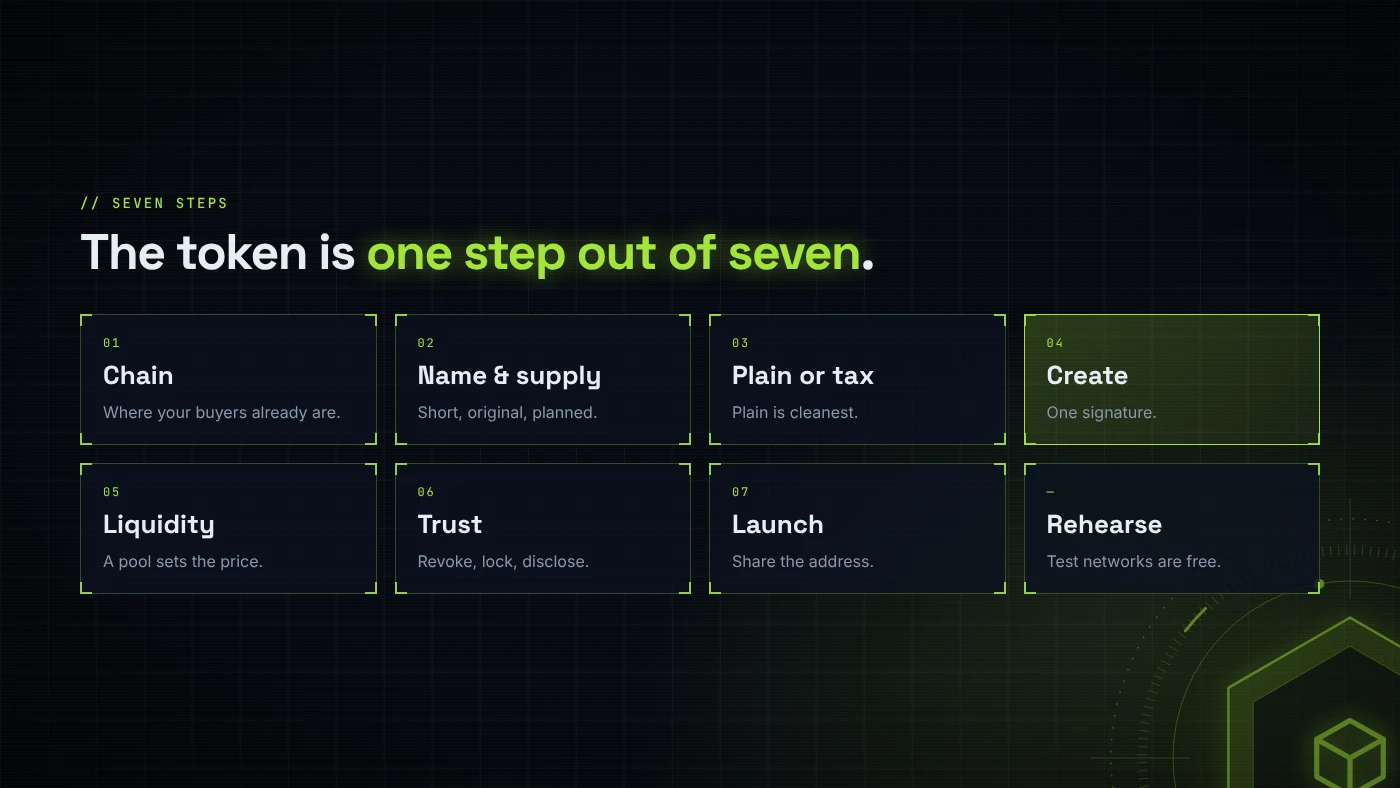
Step 4: How do you create the token?
With a token generator (no code):
- Open the DegenKit launcher and pick the network.
- Connect your wallet.
- Enter name, symbol and supply, and on Solana a logo.
- Review the fee and sign.
The token generator guide explains what happens behind the form.
With your own contract (code): write or adapt an ERC-20 or SPL program, test it, deploy it and verify the source. This gives full flexibility but costs time and money. See token generator vs custom smart contract.
Step 5: How do people buy it?
A token cannot be traded until it has a liquidity pool. You deposit your token plus SOL, ETH or BNB on a DEX, and the ratio sets the starting price. See creating a token vs adding liquidity. The free liquidity calculator shows the starting price before you deposit.
Step 6: How do you earn buyers' trust?
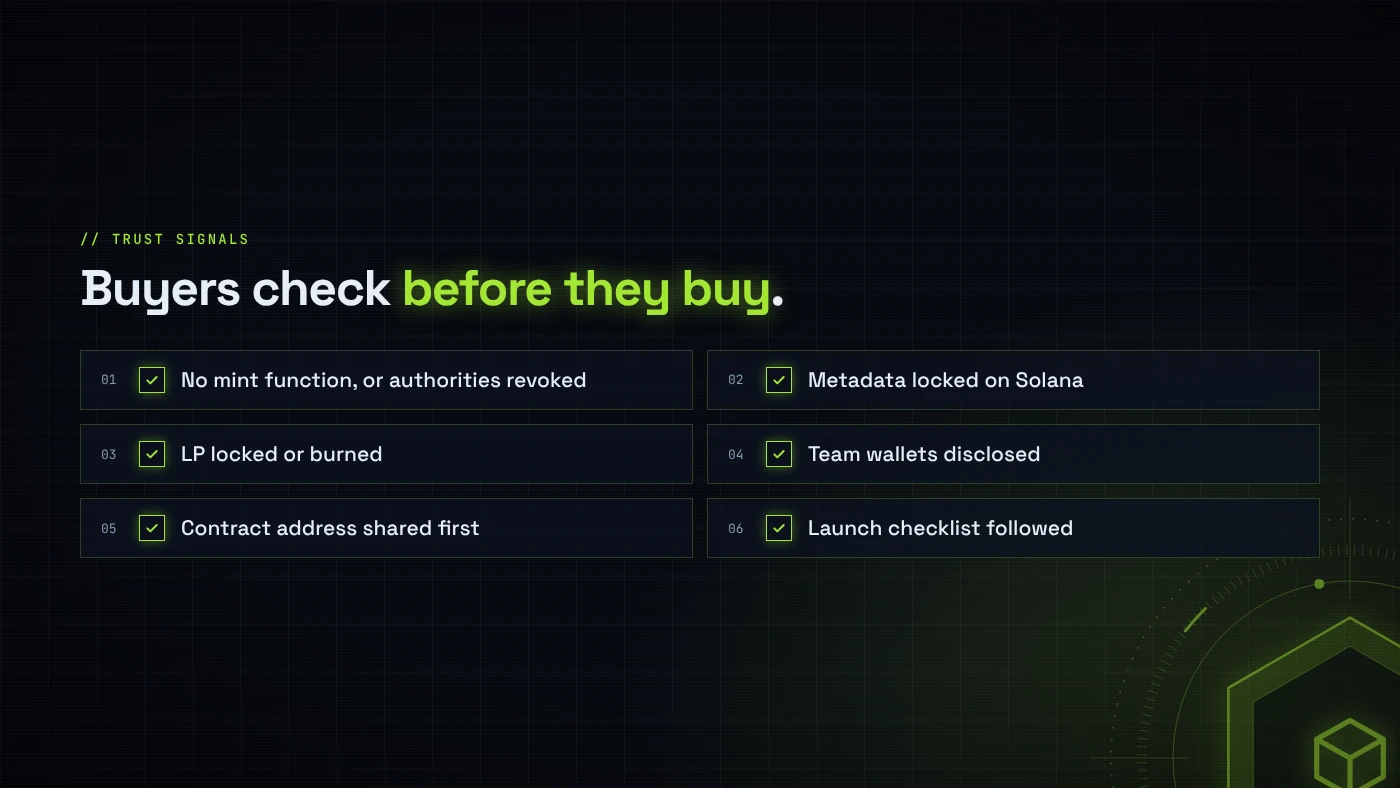
- Revoke authorities on Solana, or use a token with no mint function on EVM chains.
- Lock or burn the LP so the pool cannot be pulled.
- Disclose team wallets and the allocation.
These are the checks buyers run. See how to spot rug pull risk.
Step 7: How do you launch it?
Share the contract address on your official channels, explain the supply and liquidity, and follow a token launch checklist. Expect bots in the first minutes and plan your pool depth for them.
What are the risks?
- Wrong network or wrong address when sending funds.
- Thin liquidity that makes the price swing.
- Copycats using your name with a different contract.
- Most new tokens lose value.
You can lose money in crypto. This is not financial advice.
FAQ
How much does it cost to create a crypto token?
With DegenKit, 0.28 SOL on Solana, or the fee read from the contract on EVM chains, plus gas. A custom contract can cost thousands of dollars to develop and audit.
Can I create a crypto token for free?
Not on mainnet. Every chain charges gas. Test networks are free but have no real value.
How long does it take to create a token?
With a token generator, about a minute. Planning, liquidity and launch take longer.
Do I need to know how to code?
No. A token generator handles the code. You only sign the transaction.
Sources
- DEV Community: How much does smart contract development cost in 2026
- DegenKit docs: Supported networks
- DegenKit docs: Tax Token
Create your token without code on the DegenKit launcher.