Are Token Generators Safe? 7 Checks Before You Use One
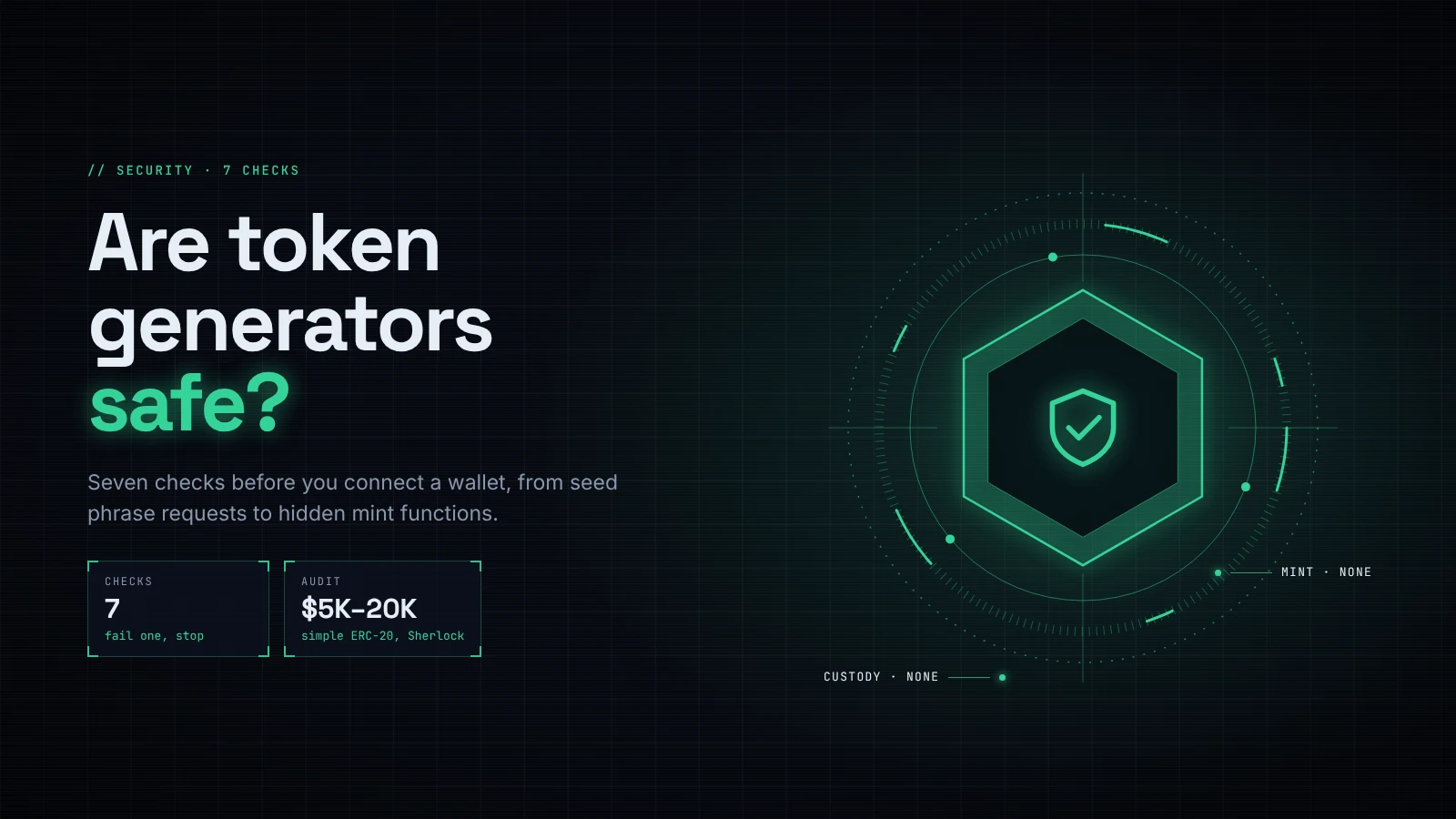
Are token generators safe? Seven checks before you connect a wallet, from seed phrase requests and hidden mint functions to public code and what you actually sign.
 DegenKitNovember 17, 2026 · 5 min read
A token generator is safe when it is non-custodial, shows every fee before you sign, creates tokens without hidden owner powers, and has code you can inspect. The risk is not the idea of a generator. It is fake sites that drain wallets, and templates that hide a mint or blacklist function. Seven quick checks separate the two.
What can go wrong with a token generator?
Two kinds of risk:
- Risk to you, the creator. A fake site asks for your seed phrase, or tricks you into signing an approval that drains your wallet.
- Risk to your buyers. The generated token contains hidden powers, such as minting more supply, blocking sells or changing fees, and the tool's owner, or you, can use them later.
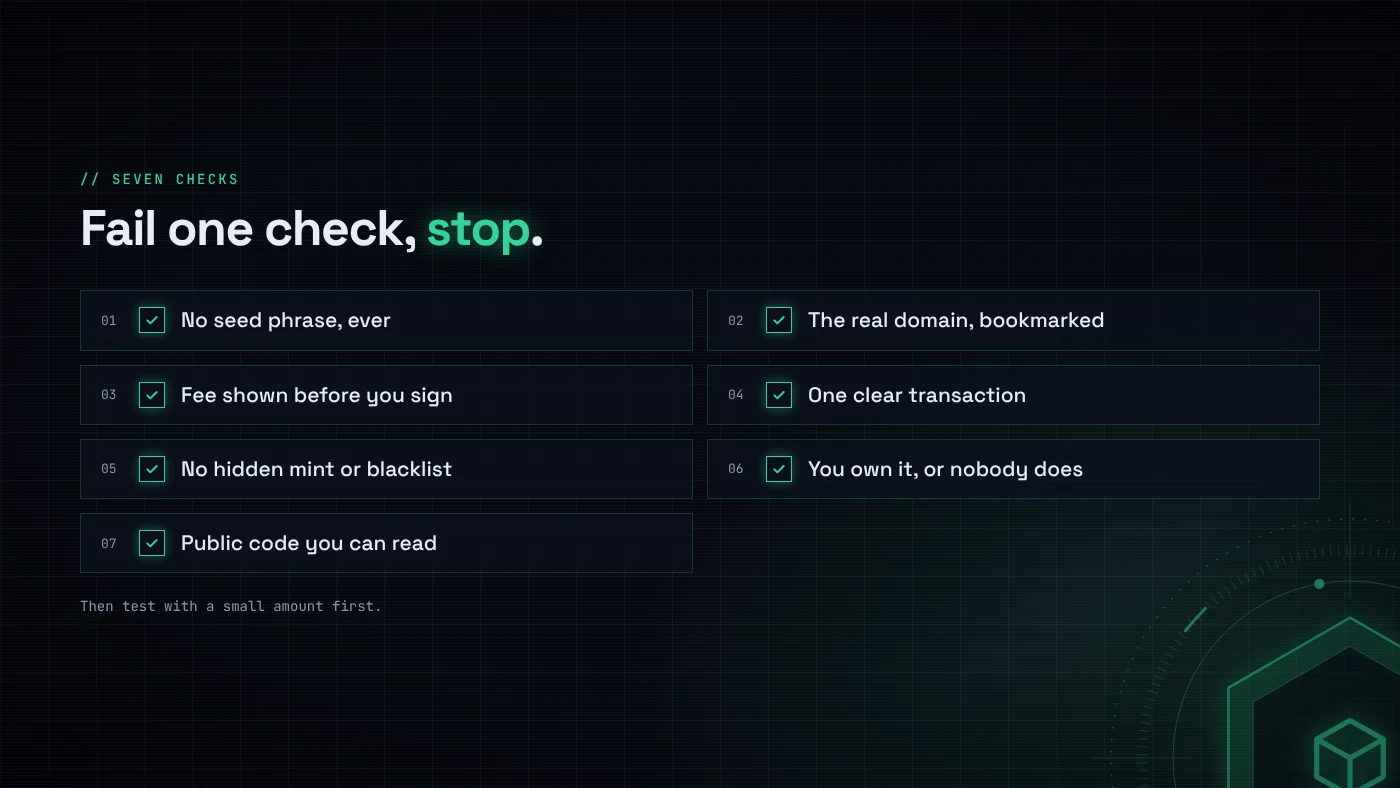
What are the seven checks?
- No seed phrase, ever. A legitimate generator asks you to sign in your wallet. It never asks you to type your recovery phrase or private key.
- The right domain. Bookmark the real site. Wallet drainers copy well-known tools.
- The fee is shown before you sign. Your wallet prompt should match what the page says.
- You understand what you sign. Creating a token is one transaction. A request for unlimited token approvals during creation is a red flag. See ERC-20 token approvals.
- No hidden powers in the token. Check the contract for mint, blacklist, pause or fee-change functions. Dedaub notes that hidden mints can be renamed or added later through a proxy upgrade. See how to spot a honeypot token.
- You own it, or nobody does. After creation, ownership should be your wallet, or renounced. On Solana, mint and freeze authority should be revoked. See mint authority vs freeze authority.
- Public code. If the generator's code is public, anyone can check what it does.
How does DegenKit answer these checks?
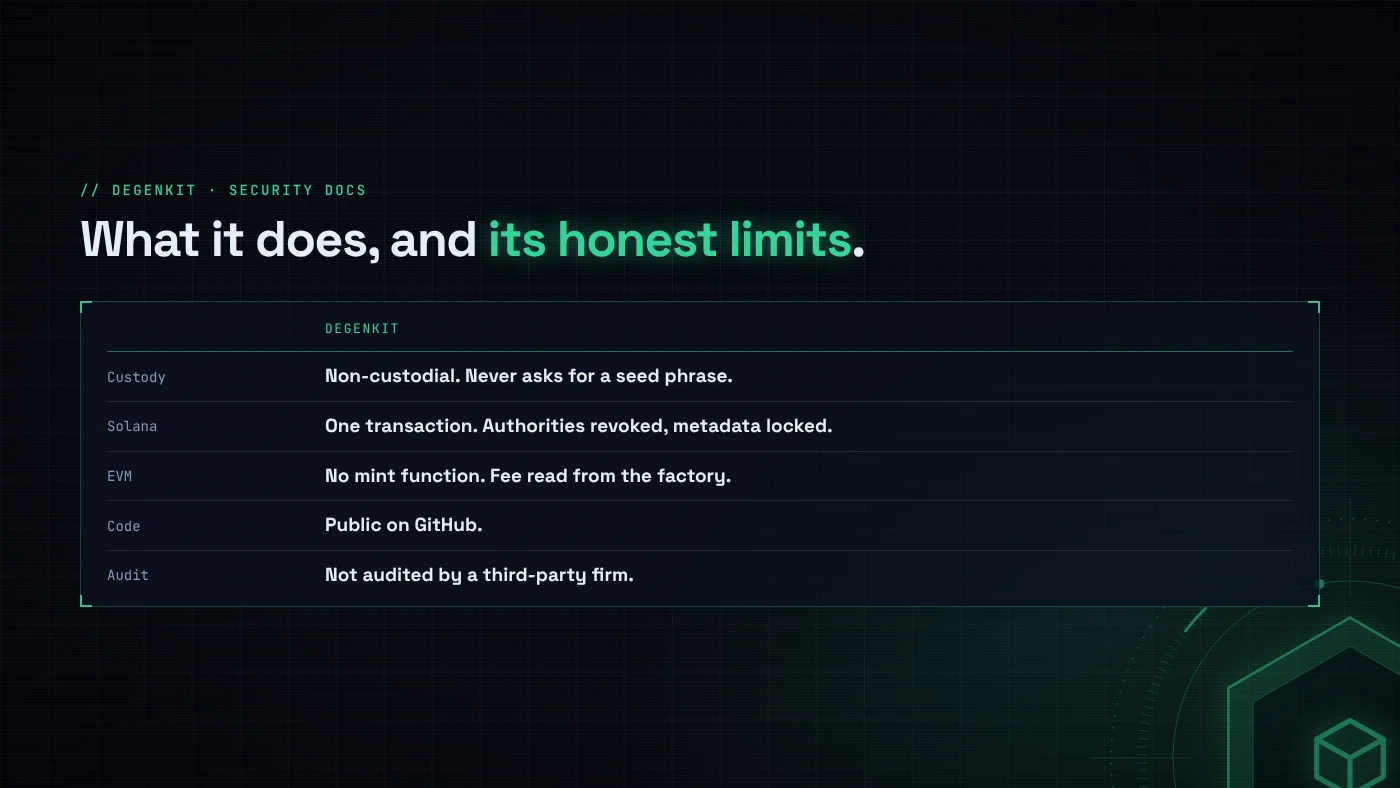
From DegenKit's security docs:
- Non-custodial. It never asks for your seed phrase and cannot move your funds.
- One transaction on Solana creates the mint, account, supply and metadata, then revokes the authorities. The fee goes to a public fee address.
- EVM tokens have no mint function. The service fee is read from the factory contract.
- Public code on GitHub at LuncroDev/degenkit-app.
- Honest limits: it has not been audited by a third-party security firm. The docs recommend testing with a small amount first.
Read more in is DegenKit safe?.
Why does an audit matter, and why do generators rarely have one?
An audit is an independent security review of the code. Sherlock's 2026 pricing reference puts a simple ERC-20 audit at $5,000 to $20,000. A generator that uses one small, fixed template has less code to go wrong than a custom contract. But "no audit" still means you should test small first. Compare the trade-offs in token generator vs custom smart contract.
How do you check a token after creating it?
- Solana: paste the mint into a scanner. Mint and freeze should be revoked, metadata locked.
- EVM: open the contract on the explorer. Look at the functions and the owner.
See how to spot rug pull risk and the wallet security guide.
What are the risks?
- Phishing copies of real generators.
- Malicious approvals that drain wallets later.
- Unaudited code on any tool, including DegenKit.
You can lose money in crypto. This is not financial advice.
FAQ
Are token generators legit?
Many are. Check that they are non-custodial, show fees, create clean tokens and publish their code.
Can a token generator steal my crypto?
A fake one can, if you type your seed phrase or approve a malicious contract. A legitimate one cannot move your funds.
Is DegenKit audited?
No. DegenKit's docs state it has not been audited by a third-party security firm, and its code is public on GitHub.
Sources
Read the security page, then try the DegenKit token generator with a small amount first. For the full picture, see the token generator guide.