Ethereum or Robinhood Chain: Where Should Your Token Live?
Ethereum is the original settlement layer. Robinhood Chain is a newer Layer 2 that settles to it. Compare fees, bridging, explorers and liquidity before you choose.
 DegenKitOctober 30, 2026 · 4 min read
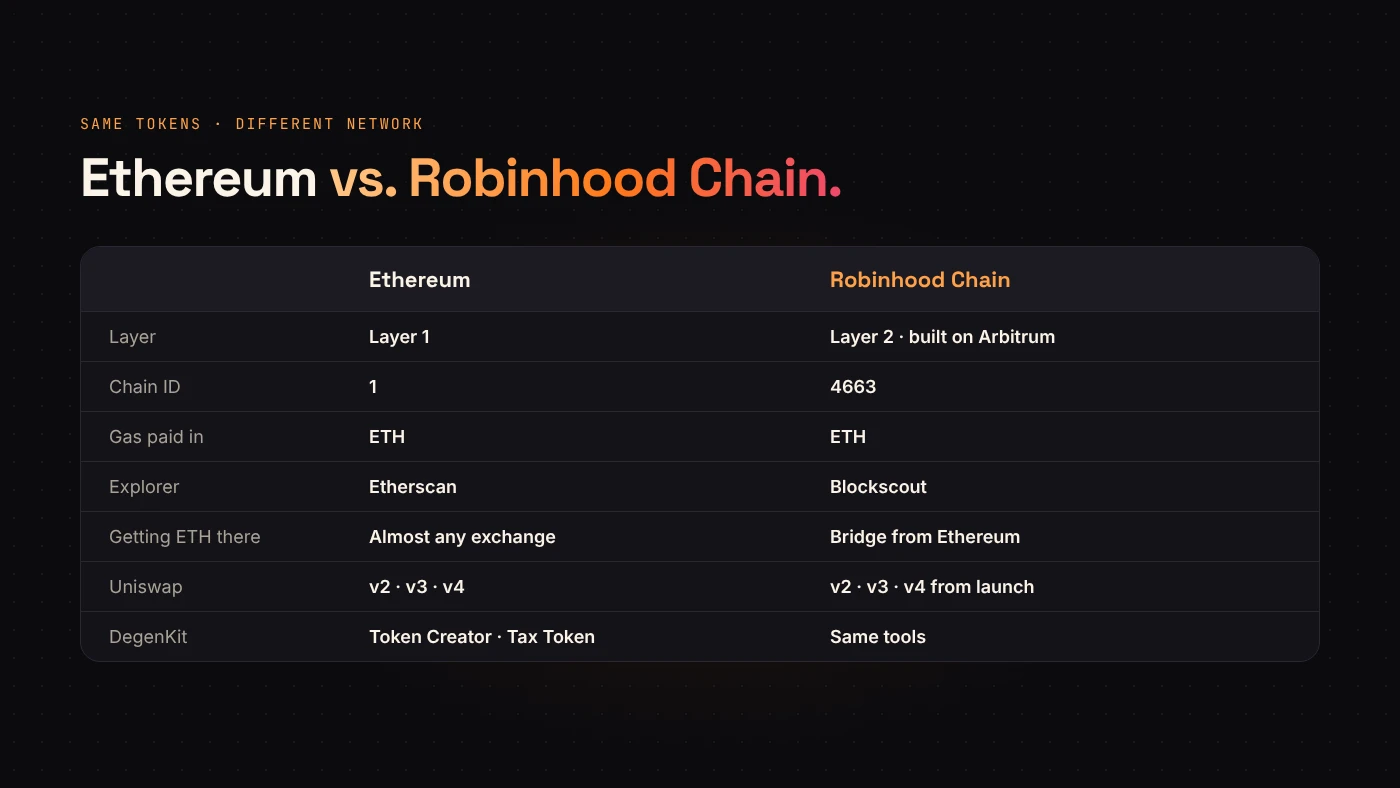
DegenKit offers the same two token creators on Ethereum and on Robinhood Chain: a plain ERC-20 and a tax token. The contracts behave the same. What changes is the network around them: what each transaction costs, how buyers get funds there and where they look up your token.
Two layers, one family
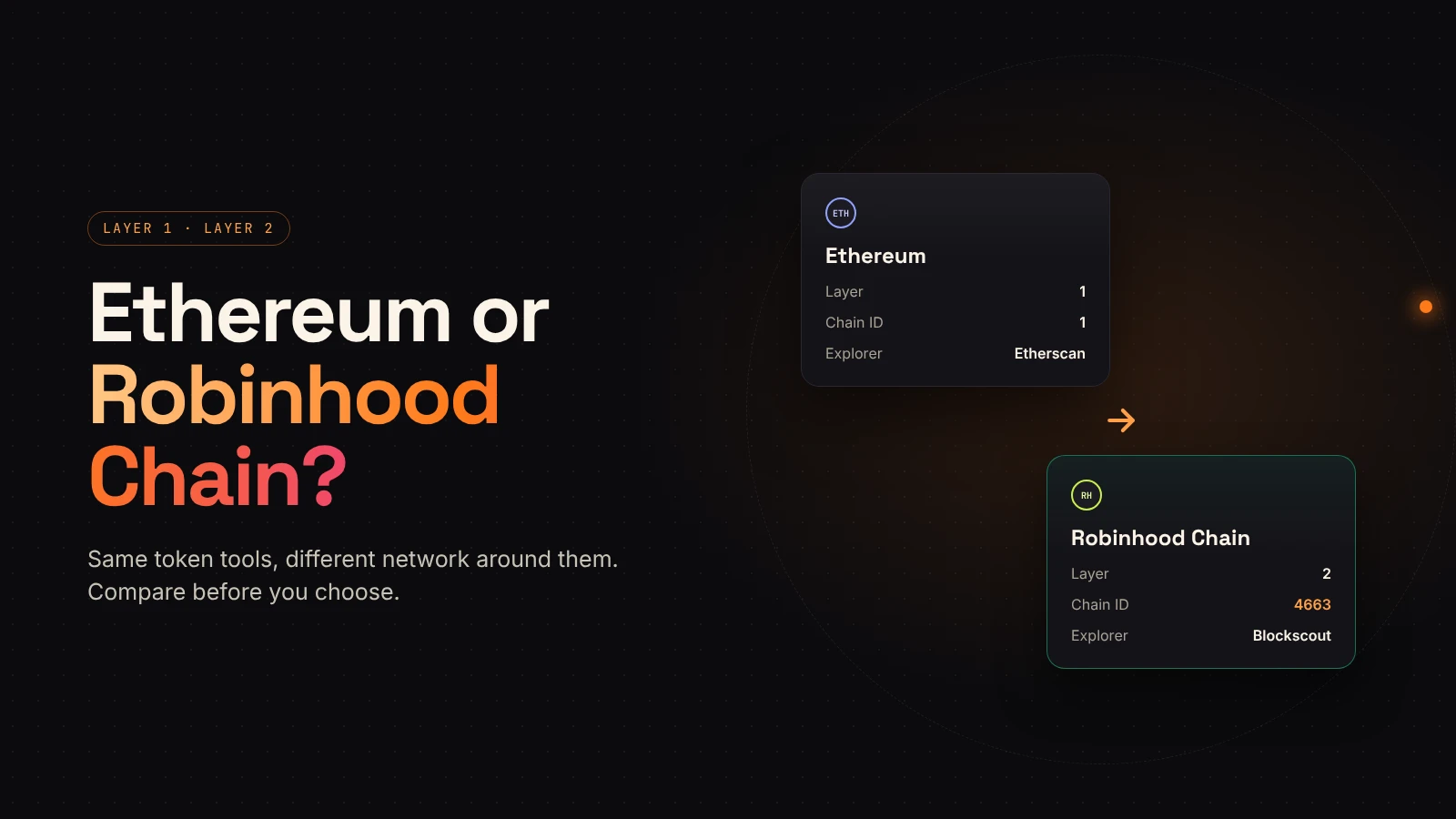
Ethereum mainnet is a Layer 1. Transactions settle directly on it, and its fee market can be expensive when it is busy. Our guide to Ethereum gas fees explains why.
Robinhood Chain is a Layer 2. Robinhood's announcement describes it as built using the Arbitrum platform, with its public mainnet launched on 1 July 2026. According to its bridging documentation, its canonical bridge inherits its security from Ethereum.
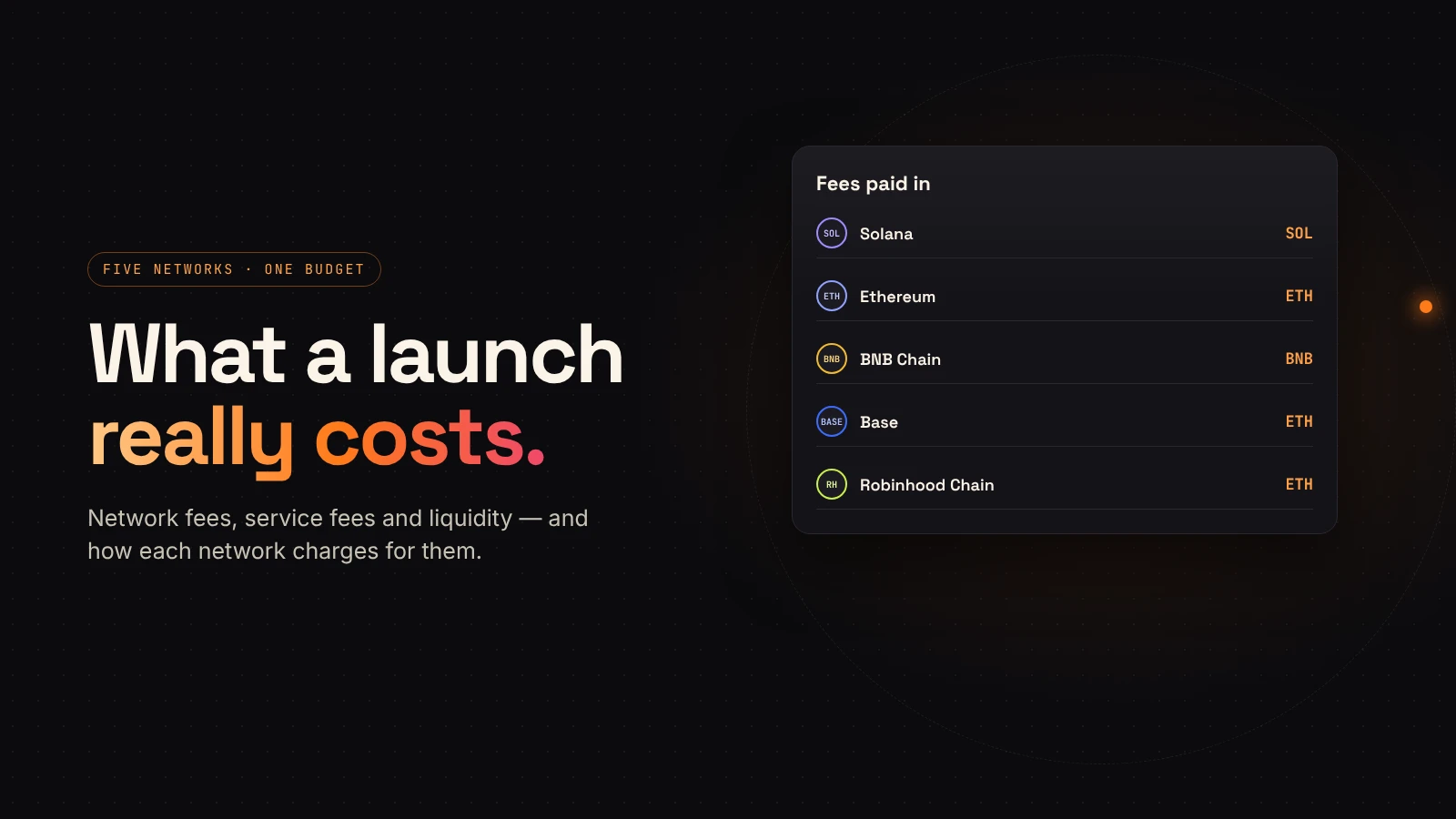
Both use ETH for gas and the same wallets. A MetaMask address works on both, but each network keeps its own balances and tokens.
Fees
A Layer 2 processes transactions on its own chain and settles to Ethereum in batches. That is how networks like Robinhood Chain keep fees lower than Ethereum mainnet. For a launch with several transactions — create, approve, add liquidity, mark a pool — the difference adds up.
Getting ETH there and back
On Ethereum, buyers already have ETH or can get it from almost any exchange.
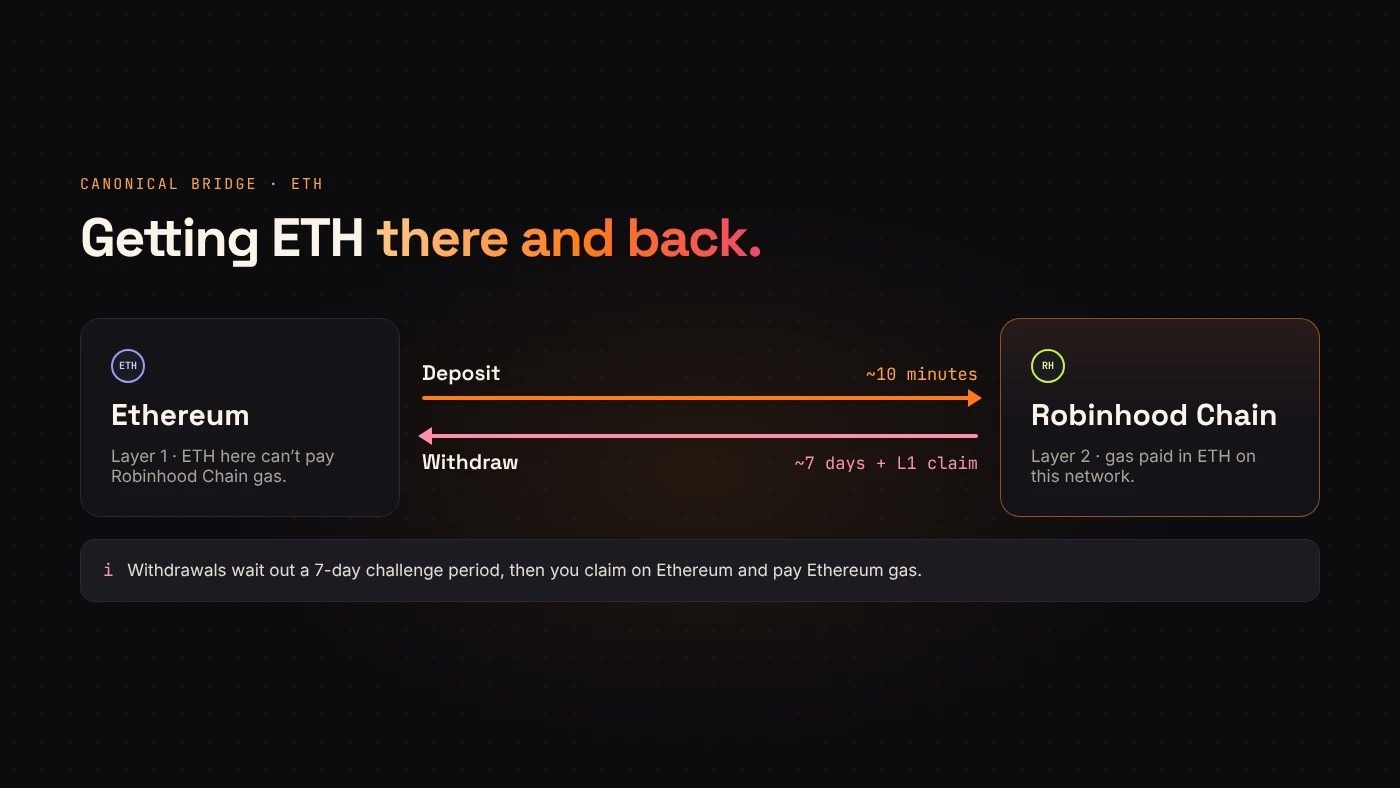
On Robinhood Chain, ETH has to arrive on that network. Robinhood's docs describe the canonical bridge:
- Deposits from Ethereum typically confirm within about 10 minutes.
- Withdrawals back to Ethereum take about 7 days, because of a challenge period, and the final claim pays Ethereum gas.
Explorers and settings
- Ethereum: chain ID 1, gas in ETH, explorer Etherscan.
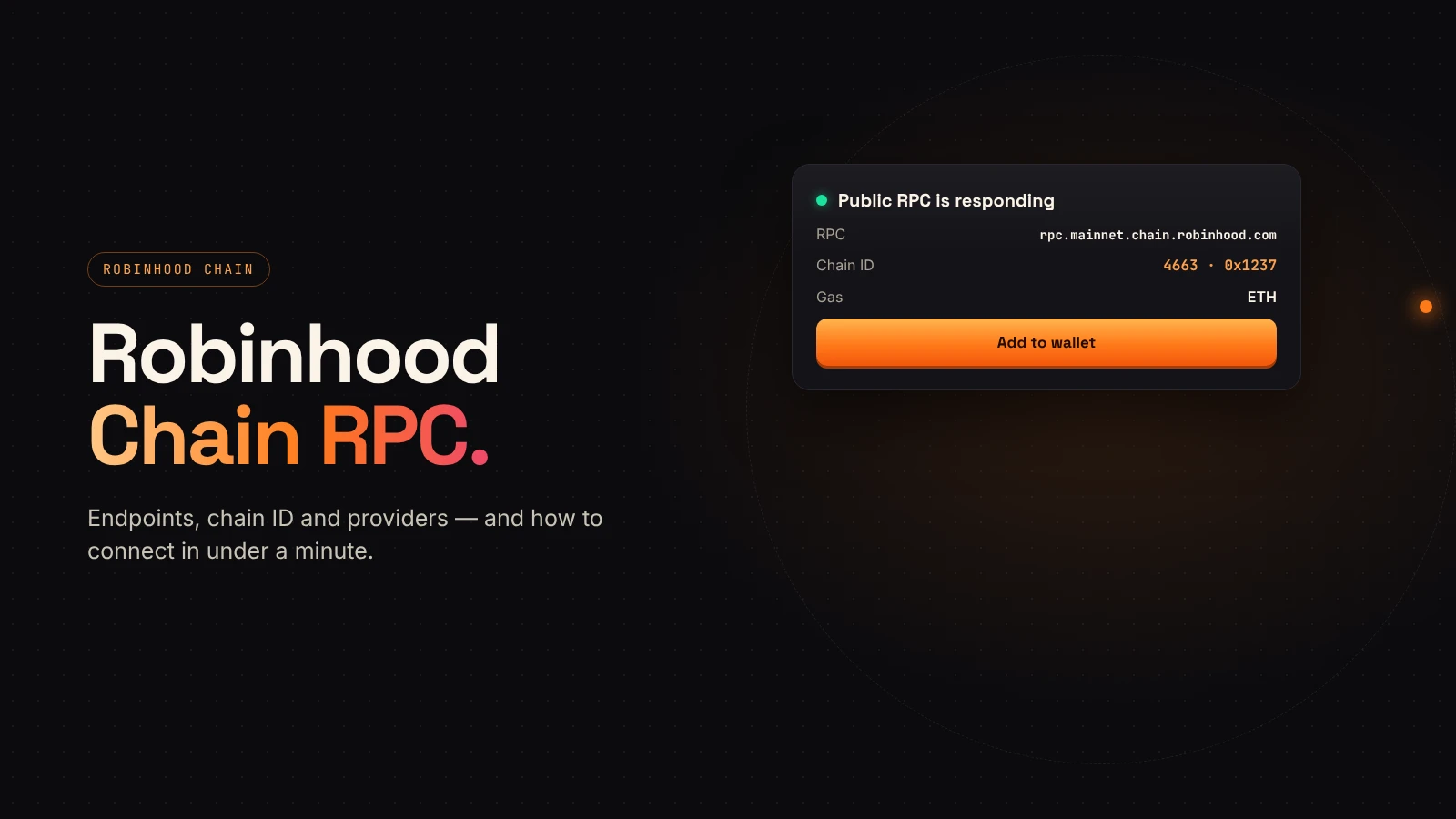
- Robinhood Chain: chain ID 4663, gas in ETH, explorer Blockscout.
DegenKit asks your wallet to add and switch to Robinhood Chain when you connect. Our Robinhood Chain guide lists every network value.
Liquidity
A token is only tradable once it has a pool. Uniswap is live on both networks. Reports from launch say Uniswap v2, v3 and v4 were available on Robinhood Chain from day one. Ethereum has the longer history and the deepest overall liquidity, while Robinhood Chain is newer and its audience is still forming.
How to choose
Choose Ethereum if your buyers already live there, you want the most established network, and you are comfortable with higher gas.
Choose Robinhood Chain if you want lower fees for every step, your audience is ready to bridge, and you accept that it is a newer ecosystem.
Questions people ask
Is a token on Robinhood Chain the same as one on Ethereum?
No. Even with the same name and symbol, they are separate contracts on separate networks.
Do I need a Robinhood account?
No. Robinhood Chain is a public network. Any EVM wallet can connect.
Wrap up
Ethereum offers the most established home and the highest fees. Robinhood Chain offers lower fees and a newer audience, with a bridge in between. DegenKit's creators work the same on both, so choose the network your buyers will use. Open the Ethereum or Robinhood Chain launcher when you've decided.